Average Reviews:

(More customer reviews)Are you looking to buy Shopping for God: How Christianity Went from In Your Heart to In Your Face? Here is the right place to find the great deals. we can offer discounts of up to 90% on Shopping for God: How Christianity Went from In Your Heart to In Your Face. Check out the link below:
>> Click Here to See Compare Prices and Get the Best Offers
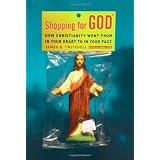
Shopping for God: How Christianity Went from In Your Heart to In Your Face Review"This is not a book about God" (p. 1).Thus begins James Twitchell's book, Shopping for God. "Essentially, this book is about how religious sensation is currently being manufactured, packaged, shipped out, and consumed" (p. 3). It is about "... buying and selling..." the religious experience. "...[We] are doing a robust business in supplying valuable religious experiences for shoppers at reasonable prices" (p. 2).
Sam Harris and others might counter that this price is too high, but that's a subject that can reviewed in their books.
Twitchell uses a lot of examples in this well-written book. He brings up the evolution of the religious braggart in the entertainment industries (note Mel Gibson's impact with The Passion of the Christ). He discusses the development of the Jerry Falwell and Pat Robertson types (did Robertson really state of liberal professors, "They are racists, murderers, sexual deviants, and supporters of Al Qaeda -- and they could be teaching your kids" (p. 8)).
Radio, television, books, and the internet... these are all fertile ground for the planting of of the seeds of religious dogma. "Just about every American -- 96 percent, in one poll -- believes in God" (p. 22). Twitchell proclaims that there are over 2000 religious groups in America today.
And there is extreme competition for market share.
People are shopping, and religions are branding. Twitchell discusses the marketing strategies in this Church Growth Movement. There is competition for your soul.
Here's an example that I missed: the United Church of Christ's infamous "bouncer" campaign in 2005. The television ad goes like this. All types of people are denied entry to a church by a tough bouncer. Fade to black. The a narrator states "Jesus didn't turn away people. Neither do we" (p. 160).
Mormons, Lutherans, Baptists, Episcopalians -- even Unitarian Universalists (the Uncommon Denomination... we're here if you need us, but we're not going after you) -- they all have marketing campaigns.
This evolution of marketing programs has led to the development of Megachurches. Twitchell discusses these, and their growth, in some detail.
Twitchell concludes, "How religion allows us to make either meaning or mincemeat out of this shrinking world remains to be seen" (p. 291).
Apatheist -- that's what Twitchell calls himself ("... a disinclination to care all that much about one's religion and an even stronger disinclination to care about other people's" (p. 33)).
This was an interesting, not so flattering, overview of the religious world we live in in America. We line up to belong. I have no idea whether people pretend to believe, try to believe, or truly believe. Twitchell just argues that it seems like every time you turn around, someone is throwing it in your face. And nobody seems to be complaining.
As Rod Serling might say, ""There is nothing wrong with your television set..." Our minds are not our own.Shopping for God: How Christianity Went from In Your Heart to In Your Face Overview
Want to learn more information about Shopping for God: How Christianity Went from In Your Heart to In Your Face?
>> Click Here to See All Customer Reviews & Ratings Now

0 comments:
Post a Comment